Common Ground is a student initiative founded by two UdK students, Benjamin Glatte and Elisabeth Hoschek, in 2015, as a direct response to the war in Syria and the significant number of people seeking refuge in Berlin. From the outset, it aimed to support people who have experienced forced migration by providing guidance and opportunities to connect with local artists and organizations. Over time, it expanded to offer help and a sense of belonging to newcomers, both before and during the application process for the studies. Although Benjamin and Elisabeth have long since graduated, and the team has changed over the years, the initiative continues—now with new members—to foster awareness of migration and exile-related issues.
In general terms, Common Ground works on to remove internal institutional barriers and encourage inclusivity. We see ourselves as a body within the institution that facilitates networking among administration, students, initiatives, and artists with shared interests. Common Ground works in collaboration with Artist Training, International Office, Studierendenberatung, Studium Generale, StuPa (Student Parliament), AStA (Allgemeiner Studierendenausschuss). The student initiative received funding from the DAAD and the German Federal Ministry of Education and Research (BMBF) through the efforts of the International Office.
Well, here we are. We are all living in challenging times. As cheesy as it may sound, no one knows where the world is heading tomorrow. If before uncertainty primarily affected certain marginalized groups, now the tension is in the air, and the times of unease have clearly settled across Europe. What seemed obvious and normal now has to be reconsidered.
As a Ukrainian, I am quite happy there is space for me within the University where I can be helpful to others. Once you found yourself a place for yourself, you immediately want to make some space and bring your community in. Our trauma should not block us from moving on in life; the most unfortunate circumstances teach us to focus on what’s happening right here, right now, and try to support others. I personally expect more global challenges in the near future. But global processes will strike locally. We entered the era of budget cuts. The ones who normally have to disappear first are initiatives like ours. But here we are, we keep going.
2015 was more than 10 years ago. In my personal case, back in 2015 it was more or less the second year of russian aggression in Ukraine. I was living in Kyiv, and I wouldn’t have ever thought that in 2026 I’d be writing a blog post for my university while sitting in Berlin. Wait, which university? What am I even doing in Germany?
While preparing several presentations for the administration in support of next year’s funding requests, I found a quote that resonated with my research. It was from the Hochschulkonferenz page, by Prof. Dr. Kathrin Peters (Member of the Academic Senate and the Commission for Equal Opportunities, and Chair of the Contact Point for Discrimination and Violence at the UdK Berlin). Here is a loose translation from German:
The Berlin University of the Arts recognizes the crucial role an art academy plays in enabling participation, as the arts, like few other social spheres, open up opportunities for expression and agency, including for marginalized groups. Subjectivity and belonging are constantly renegotiated in the arts – be it in theater or film, literature, visual arts, or the various genres of music. The arts therefore possess a transformative potential for society.
I believe marginalized groups should not exist outside the institutional routine, as if they were exceptions to the norm, or not different from other international students. The challenge is not to erase our specific experiences, but also not to reduce us to narratives of pity or victimhood. Creating genuinely inclusive spaces would require institutions to rethink what they consider “normal” in everyday life. Maybe that is possible, but it would demand an enormous and sustained effort — one I’m not sure institutions are willing to make. In the meantime, what we can do is protect ourselves, create safer spaces, vocalize our presence, and work together.
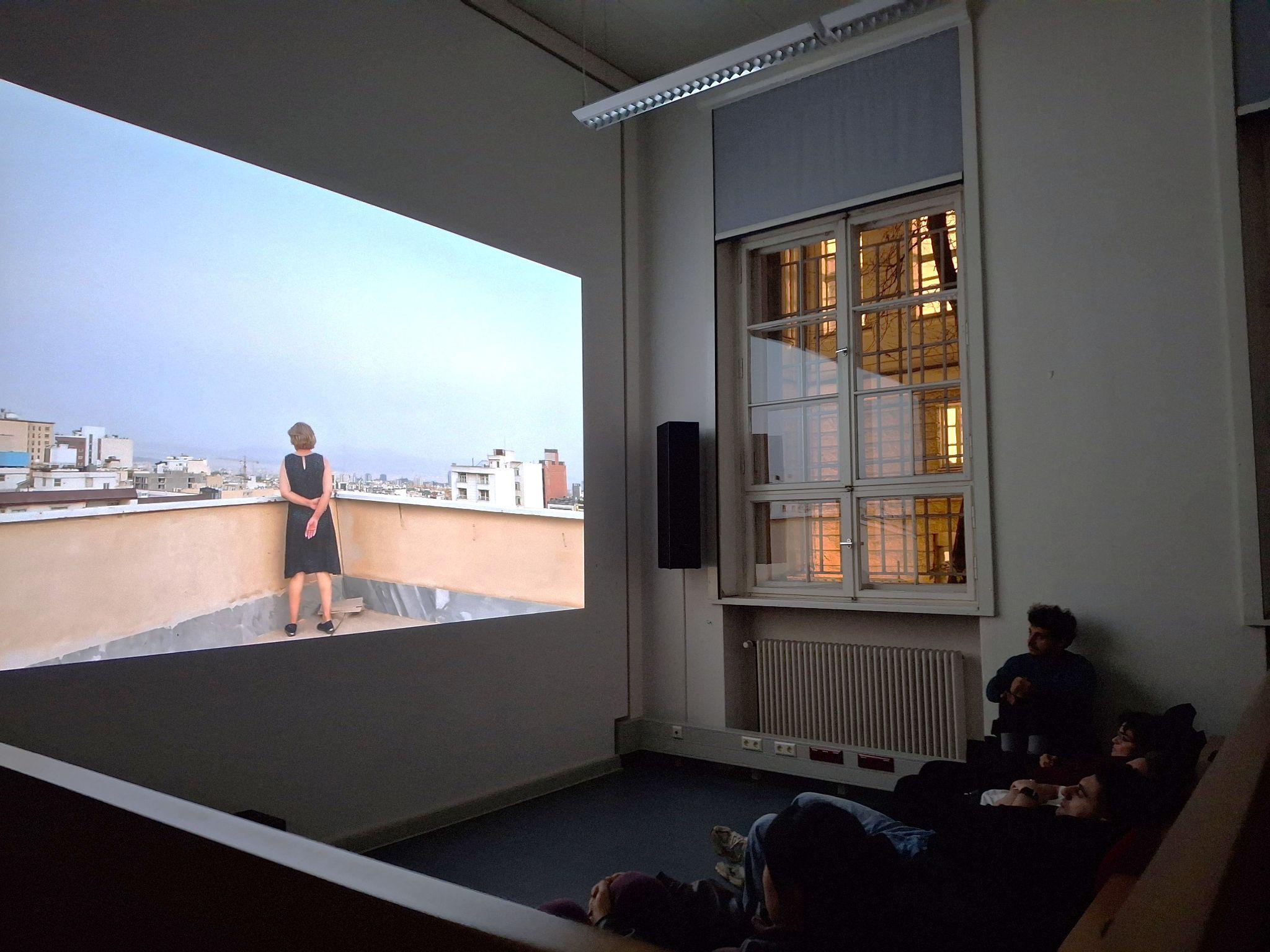
How do we function? The optimal number of people in the team is 6 students: 3 at the core Common Ground office (covering for three languages: Arabic, Persian, Ukrainian; handling the administrative work, translations, networking, community building, organizing events); and 3 in Common Ground Studio (working specifically with the people who apply for the program). But in reality, this number constantly fluctuates. There is never a fixed position for a single person for more than two years, which is tough, but that’s the reality of a working student in academia. Common Ground requires a minimum of 120 contract hours, Common Ground Studio – 80 hours. We always keep seeking external funding (over the years we were paid by DAAD WELCOME and the Senate of Berlin), but it never remains certain whether we will be able to fully meet our needs in the next year and beyond.
Aside from the constant peer-to-peer engagement, there are three main ongoing activities we initiated: two event series Untranslated Spaces and How to Study and one program.
Untranslated Spaces is a series of community events organized by students, for students (as part of the Access Art Schools Berlin project). We launched it in 2025, and, luckily, now we’re going to continue in 2026. Each session is held in one of the three languages—Ukrainian, Arabic, and Persian—so that we can connect, reflect, and exchange ideas in our mother tongue. In the duration of the project in 2025, which is roughly 6 months, we hosted 21 Persian and 3 Arabic speakers, as well as 15 Ukrainians. In case you’re thinking that’s not much, it is important to consider that this was a newly developed project built from scratch, prioritizing building trust and making the concept work.
How to Study is probably the oldest project, and the most beloved at UdK. Just to illustrate its impact: I also went through it in 2022, and it made my way into the university much easier. Common Ground has started this format of in-person meetings and explaining in a simple language how the things work, how to navigate through the UdK website, through the application process, how to prepare your portfolio and so on. Now we work together with the International Student Service, so there are professional consultants on our side, mainly our beloved friend, Barbara Aiko-Garnier, who helps us to explain UdK in great detail.
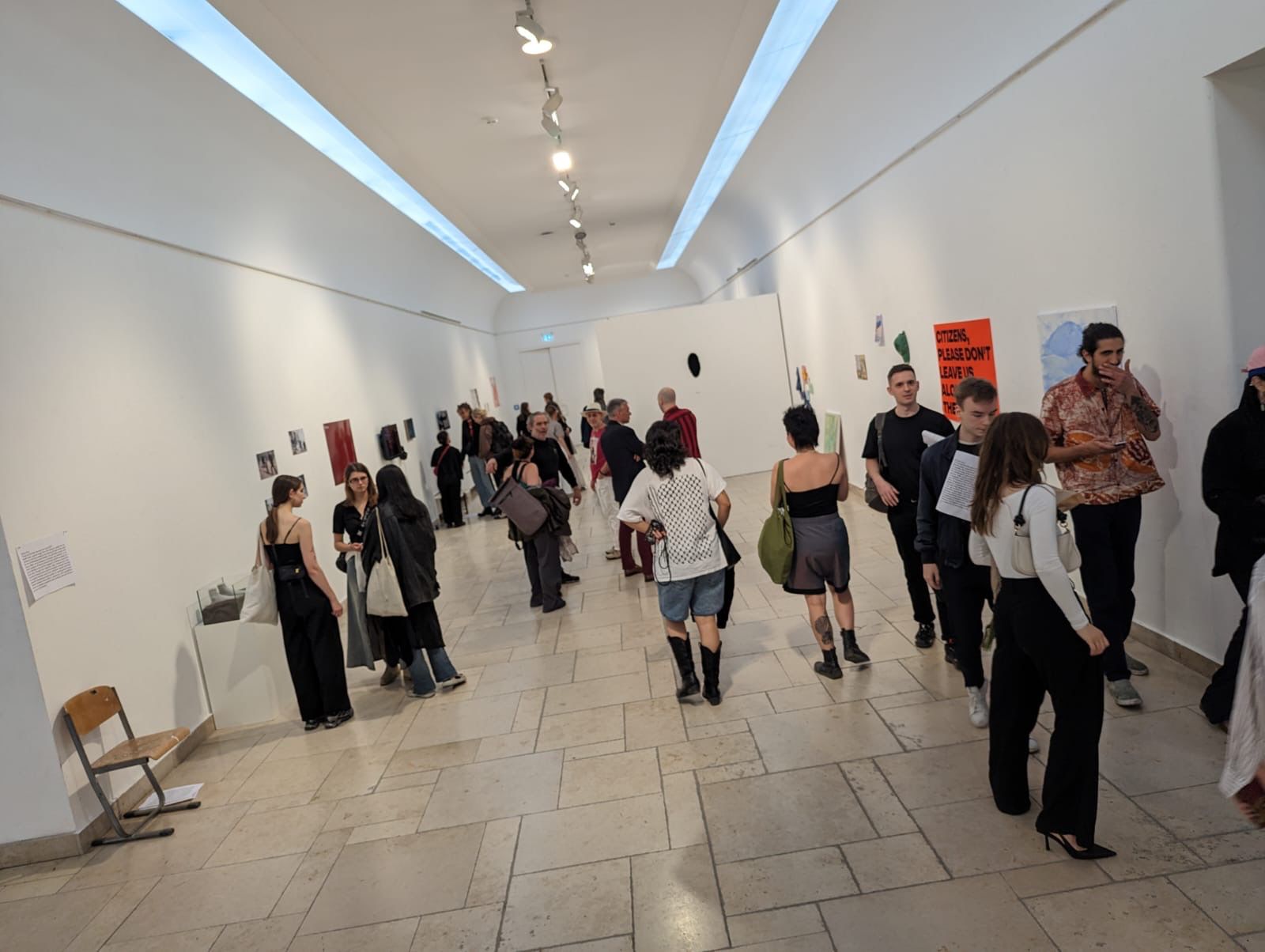
Another important side of our activities is the Common Ground Studio (CGS), the facilitated artists that would like to study at UdK Berlin and start as guest auditorship+. It’s run by the students and aided by previous generations of participants, which developed into a full program. The participants of CGS engage in class meetings, studio projects, joint exhibitions, and receive guidance from professors as well as mentorship from the Common Ground members. The CGS brings diverse perspectives into the university by supporting talented individuals who face structural inequalities – intervening against mechanisms of exclusivity.
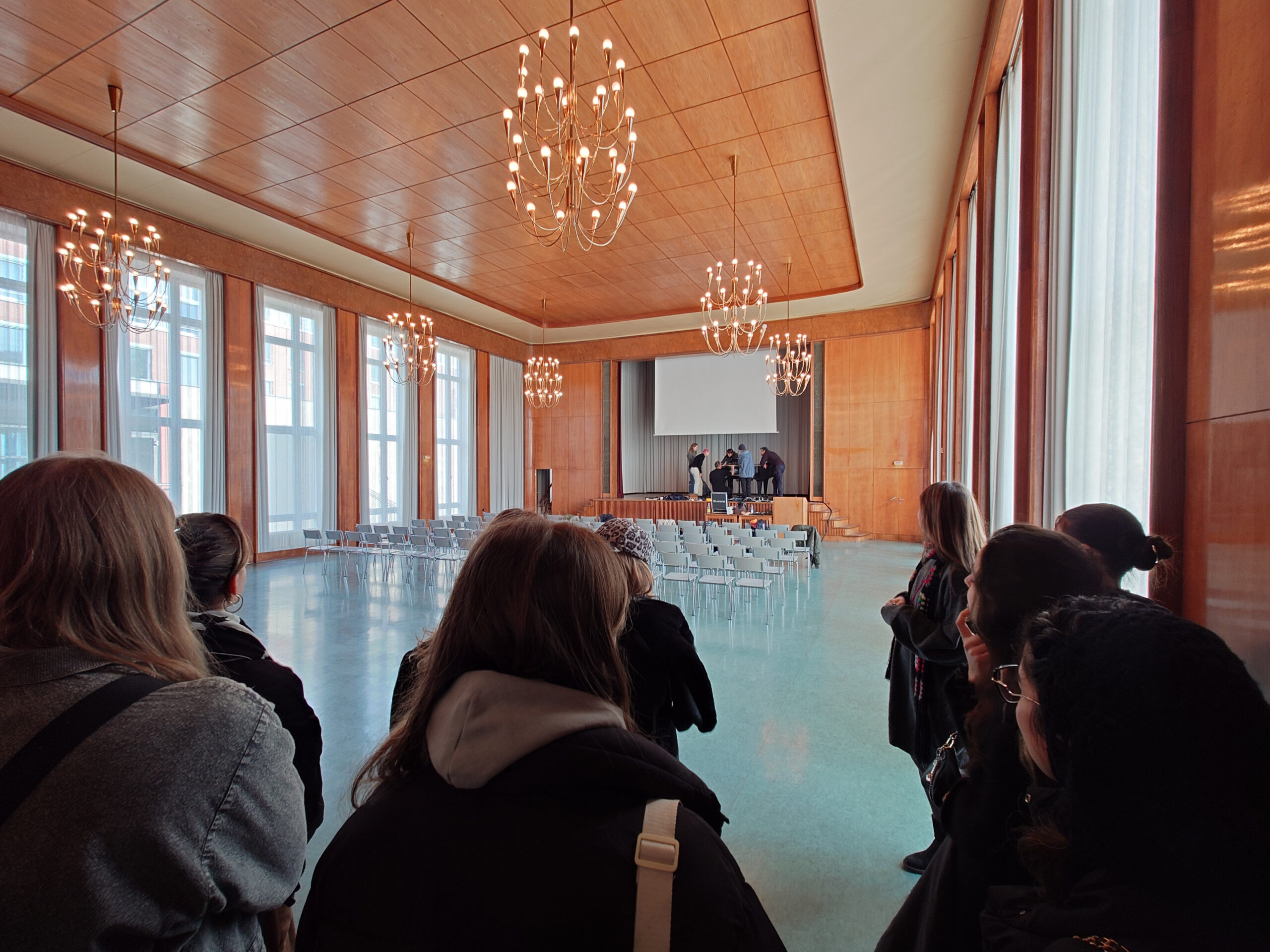
To summarize, I’d like to share some numbers with you. As for 17.06.2025, there were 107 students at risk at UdK. With our How to Study sessions between 2020 and 2025 we reached out to at least 153 participants in total. As for Common Ground Studio, from 2020 to 2024 there were 43 participants in total; out of the persons who decided to apply for UdK 21 were accepted. (collaboration with the following professors: ter Heijne, Schutter, Streuli, Weber, Pryde, Hussain-Naprushkina, Konrad, Steyerl, Fischer, Amadyar, Neugebauer); 6 group exhibitions at Hardenbergstr. since 2022. This work has been recognized as Vincent Hulme, a member of Common Ground since 2019, received the DAAD Prize 2025 for outstanding academic achievement and social involvement.
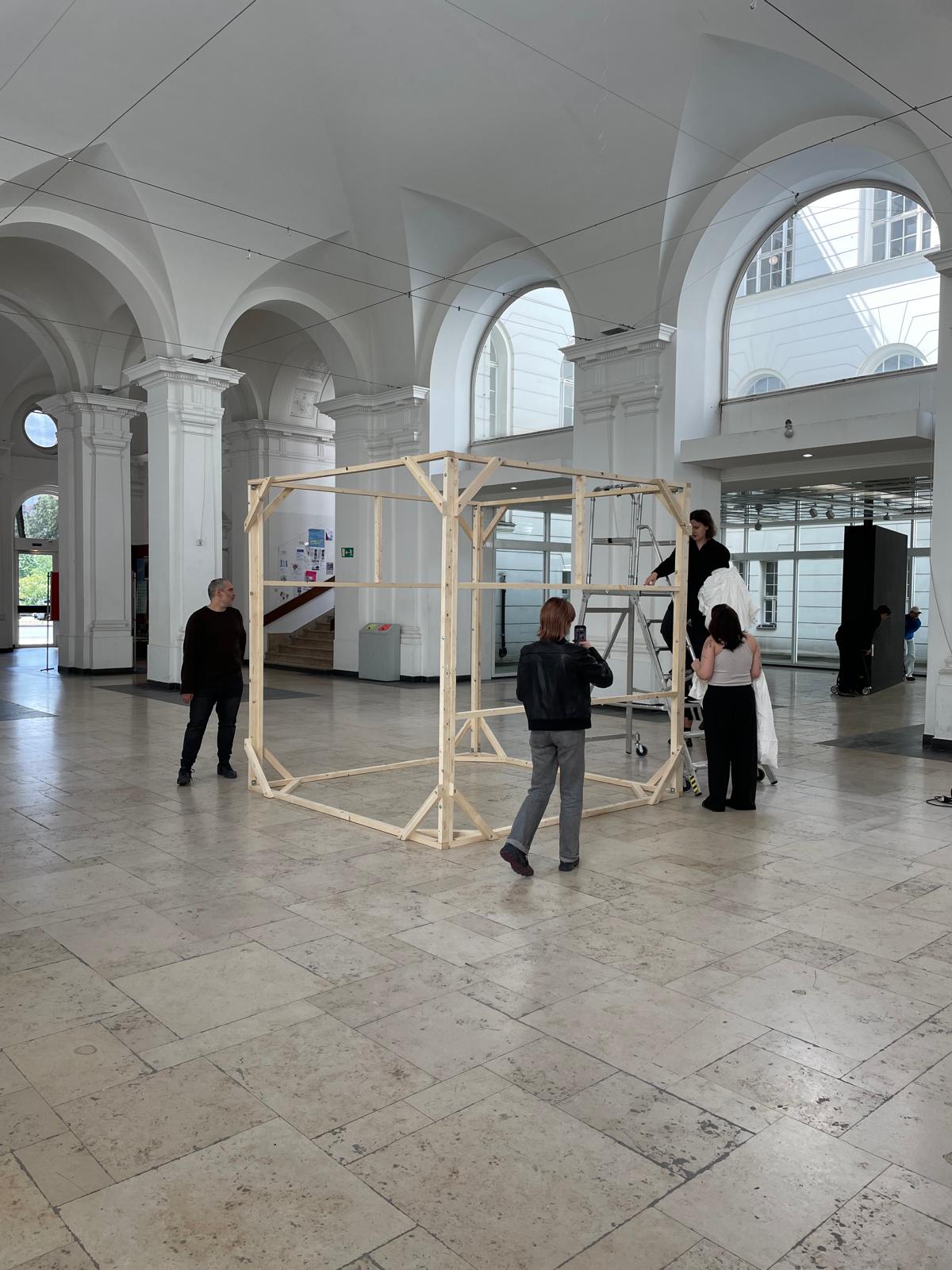
Common Ground also participated/s in various events like Diskursraum Diversität/ Zukunftstag, Academic Freedom Week, Blackademia. We actively seize opportunities to participate in professionalization events both within and beyond the university. By engaging in workshops such as Antidiskriminierung und systemische Barrieren im Hochschulkontext, Team-Building und Sensibilisierung im intersektionalen Kontext, and various Arbeitskreise, we aim to enhance our skills in key areas including anti-discrimination, effective communication, team development, and organizational psychology.
We are quite proud with what we do, and at the same time astonished by the fact that our initiative survives throughout the years. Our hopes are high, and as long as there are people we can help, we’ll try our best to be there for them.
For more information, visit our website and follow us on Instagram @commonground.udk
This text is a compilation of several files I shared with the administration of the Berlin University of the Arts, explaining how we work and what our needs are— along with a few personal reflections. I’d like this text to serve as an introduction to Common Ground.